
TCS became a slow-moving giant and lost some of its sheen to competitors -- both big and small. Even as TCS remains the primary cash cow of Tata Group, its revenue and profit growth have slowed considerably.

Abbott India outperformed the Indian pharmaceutical market (IPM) with a year-on-year (YoY) growth of 23 per cent in February. The domestic market grew at a robust 20 per cent on a low base, primarily led by volume growth and price hikes. Abbott continued to outperform the sector in the anti-diabetic space with a growth of 20 per cent and key brands such as Thyronorm (hypothyroidism), biliary agent Udiliv, insulin Ryzodeg posted robust growth.

10 high dividend paying stocks across sectors that are expected to maintain or even increase their pay-outs in FY23 thanks to faster earnings growth in the last four quarters.

With raw material prices rising sequentially in Q4 FY23, margins of fast moving electrical goods (FMEG) companies could witness pressure as they refrain from hiking prices and demand remains soft. Transition to a new regulatory regime-fans moved to new BEE standards from January 1-poses additional risk for firms. Business depends on volume trends in summer for key sub-segments, which account for a significant chunk of the sector's overall sales pie.

The S&P BSE Auto Index has been one of the biggest outperformers among sectoral indices over the past year with returns of 26 per cent. By comparison, the benchmarks - the National Stock Exchange Nifty50 and the S&P BSE Sensex - managed about 6-8 per cent during this period. Improving demand, falling raw material costs, and rising product realisations, led by the premiumisation of portfolios, have led to a revision of growth estimates and upgrades by domestic brokerages.

The stock of Aditya Birla Fashion Retail is down 10 per cent from its February high. Even as the revenue performance of the apparel retail major in the October-December quarter's for the 2022-23 financial year (Q3FY23) was better than expected, the company saw brokerage downgrades, given the weak operating performance and the pressure on margins. This the second consecutive quarter of margin miss despite strong traction on the sales front.

Domestic-focused agricultural chemical (agrochem) companies could face near-term headwinds, given the worries on the El Nio effect on monsoons, higher inventory, and pressure on margins. Some of these were reflected in the October-December quarter (third quarter, or Q3) results of companies and may impact them in the current quarter (fourth quarter, or Q4) as well. Nuvama Research pointed out that the sector witnessed mixed performance during the quarter as global agrochem and domestic fertiliser companies maintained growth momentum, while adverse agronomical conditions and excess channel inventory weighed on domestic market volume offtake.

In addition to the negative sentiment as a consequence of changes announced in the Union Budget 2023-24 concerning tax treatment for debt repayment distribution, concerns about hiring slowdown and its leasing impact, as well as higher interest rates, could blight the sector in the near term.

The country's largest listed footwear brand by market capitalisation, Metro Brands, posted better than expected December quarter results for the 2022-23 financial year (FY23), riding on store expansion and strong same store sales (SSS) growth. Profitability too remained robust, even as net profit growth was marginally lower. The company, which retails across the Metro, Mochi, Walkway, Crocs and Fitflop formats, posted a 24 per cent growth in revenues over Q3FY22.

A slowdown in hiring by India's top IT companies has resulted in a sharp increase in the industry's profit per employee in Q3FY23. The top four IT companies earned a net profit of 1.7 lakh per employee during October-December 2022, up 8.6 per cent from Rs 1.57 lakh in Q2FY23 and 16.3 per cent from a record low of Rs 1.47 lakh in Q1FY23. Earnings per employee in the third quarter were, however, still down 0.9 per cent on a year-on-year (YoY) basis.

Among the many exits from the billionaire's club in 2022 are D Uday Kumar Reddy of Tanla Solutions (net worth down 66 per cent), Sushil Kanubhai Shah of Metropolis Healthcare (down 65.7 per cent), Vijay Shekhar Sharma of One97 Communications (down 66 per cent), and C K Birla (down 43.4 per cent).

Reliance Industries Limited (RIL) has been one of the top performing companies in the large cap space under the chairmanship of Mukesh Ambani and has beaten the broader market both in terms of earnings growth and shareholder returns. In the last 20 years, RIL's net profit has grown at a compound annual growth rate (CAGR) of 15.7 per cent while its net sales have grown at a CAGR of 15.1 per cent. RIL's net profit at consolidated level has jumped 18.5 times in the last two decades growing from Rs 3280 crore in FY02 to Rs 60,705 crore in FY22; its net sales grew 16.6 times from Rs 42,129 crore to Rs 6.99 trillion.
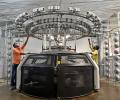
Manufacturing companies have been outperformers on the bourses in the current year, leading to a rise in their weighting in the benchmark index. Companies in sectors such as FMCG, automobile, pharmaceuticals, metals, cement, and agrochemicals now account for 25.43 per cent of the Nifty 50 index, up 88 basis points from 24.55 per cent at the end of December last year and a record low of 23.1 per cent at the end of CY20. The manufacturing sector is now dominated by FMCG majors such as Hindustan Unilever, ITC, Asian Paints, Nestle, and Britannia, accounting for 45 per cent of the combined market cap of all manufacturing companies in the index.

But the industry's chief executives remain confident of the long-term growth potential of NBFCs in India, given their specialised lending on the asset side, last-mile reach, and a well-capitalised balance sheet. "Over the years, NBFCs have faced many crises.

Banks are gaining market share at the expense of non-bank lenders such as housing finance companies, retail lenders, and those giving gold loans. There has been a steady decline in the market share of non-banking financial companies (NBFCs) in the credit market as banks have stepped up lending. NBFCs' share declined to a five-year low of 19.8 per cent in the first half of FY23, down from 20.3 per cent in H1FY22, and an all-time high of 23.1 per cent in H1FY19.

Adani Enterprises' proposed Rs 20,000 crore (Rs 200 billion) fundraising via fresh issue of equity shares through a public offer would be the fourth biggest by Indian companies, excluding banks and non-banking financial companies.

Riding on an improved show across parameters, TVS Motor (TVS) outperformed larger two-wheeler peers Hero MotoCorp (Hero) and Bajaj Auto (Bajaj) during the September (Q2 of FY23) quarter. The Chennai-based firm, which has the most-diversified portfolio among two-wheeler majors, posted a 28 per cent jump in revenues. This compares to 18 per cent growth for Bajaj Auto and single-digit uptick for Hero MotoCorp.

All nine Adani stocks saw a rise in their share price in H1FY23, ranging from 6.1% in case of Adani Ports to 102% in case of Adani Power.

Gold prices are struggling and are down 18 per cent from their March highs. But stock prices have fallen even more. As a result, the precious metal has begun to outperform equities - both in the domestic market and international markets. Gold prices are up 2.6 per cent in the domestic market in the current calendar year (CY22) so far, according to the World Gold Council (WGC), compared to a 1.7 per cent decline in the Sensex year-to-date (YTD).

India's equity markets are on a roller-coaster ride, after delivering spectacular returns for two consecutive years - in 2020 and 2021. The benchmark National Stock Exchange's (NSE's) Nifty50 is down 1.5 per cent in the first nine months of the current calendar year 2022 (CY22) as foreign portfolio investors sold Indian stocks due to rising bond yields in the US and across global markets, including India. The sell-off in the Indian equity markets has, however, not been broad-based and largely limited to sectors facing earnings headwinds from rising interest rates, lower commodity and energy prices, and likely economic recession in advanced economies.
